Why Your Personal AI Strategy Should Start at Home
Podcast Interview

If you feel like you’re falling behind the AI curve, the problem might not be your skills. It might be your access. For many, the real “unlock” for AI literacy isn’t a corporate subscription; it’s running local models on your own laptop.
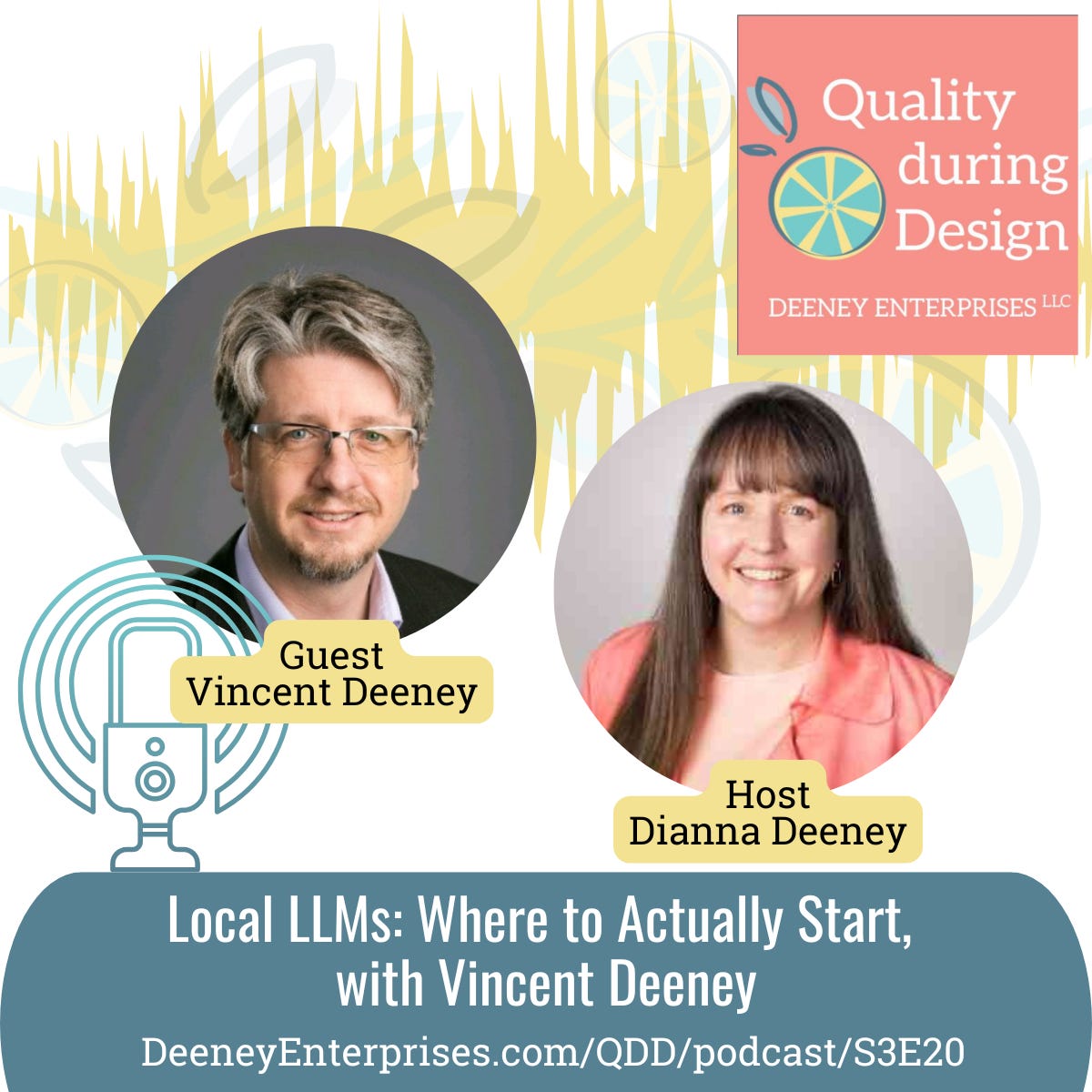
In our latest featured episode of Quality during Design, I chat with Vincent Deeney, a director with decades of experience in data governance who has spent his personal time “nerding out” on what’s possible with local LLMs. Vincent argues that playing is learning, and that by experimenting with models locally, you discover how to bridge the gap between having a technical idea and actually executing it faster.
🎧 Listen via your favorite app or get it here.
Keep reading 🡫
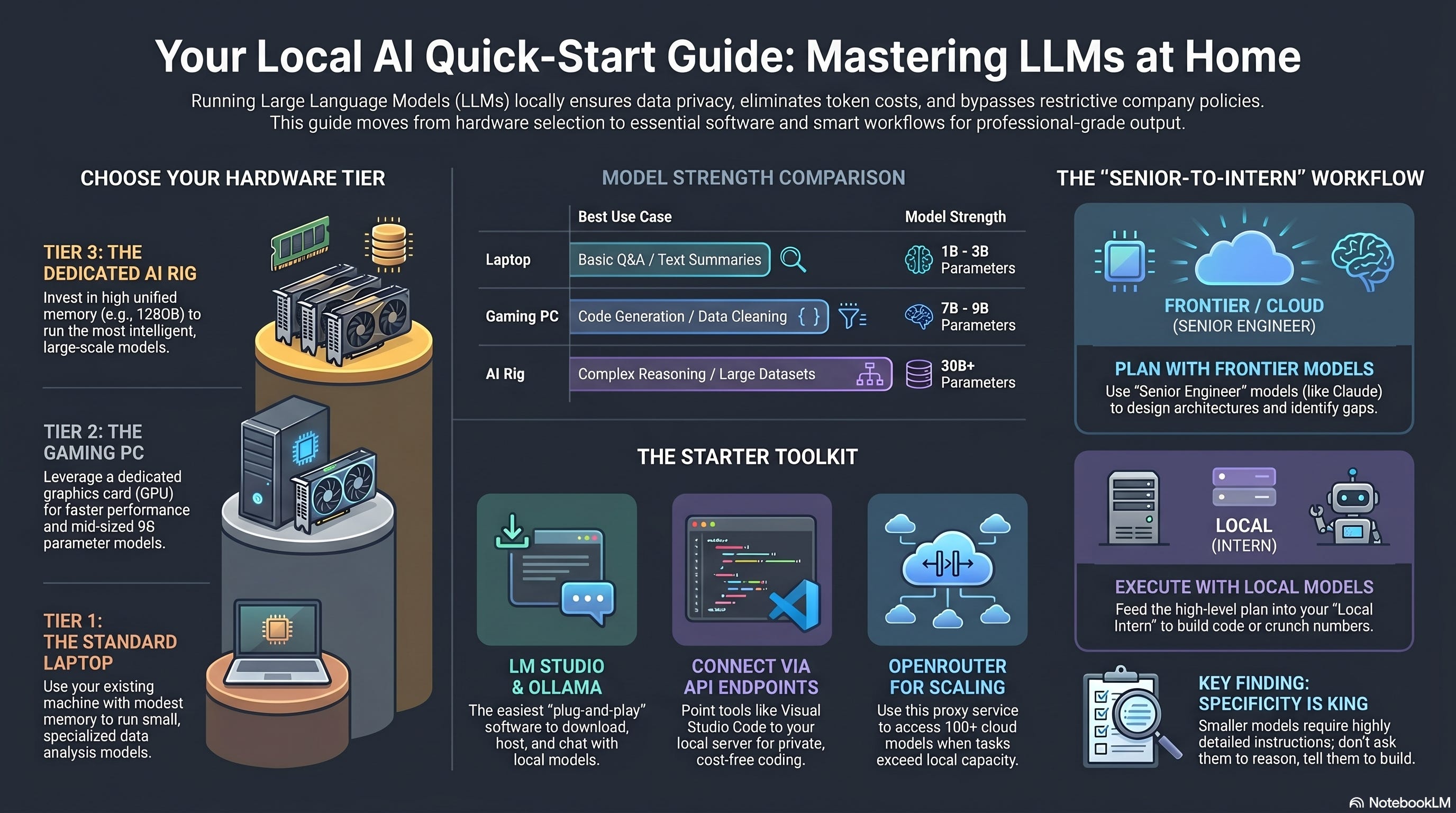
The Secret to Personal Mastery: The “Senior Engineer vs. Intern” One of the most actionable takeaways from this conversation is a workflow designed for personal growth:
The Senior Engineer (The Frontier Model): Use powerful cloud models like Claude to act as the “professor” who helps you plan architecture, identify design gaps, and define a methodology.
The Intern (The Local Model): Once the plan is set, you hand it off to a local model running on your hardware to do the “grunt work”—like writing Python code for statistical analysis or crunching local data sets.
Learning the Mechanics By moving your AI experimentation local, you get to see the “why” behind the results. You’ll learn how to manage context windows to prevent model “bloat” and how to use sub-agents to run multiple tasks simultaneously, effectively building a team of assistants that live entirely on your machine.
You don’t need to be a programmer to start; tools like Ollama and LM Studio make it easy to download and run models that fit your specific hardware. This isn’t just about productivity. It’s about future-proofing your career by learning the boundaries of what these tools can truly do.